
Answering The Most Frequently Asked Questions About Bow Tie Risk Assessment

Summary:

Bow tie risk assessment is a visual risk analysis method that helps organisations clearly understand and manage complex risk scenarios. It is widely used in high-risk industries to improve risk communication and implement effective controls.

TL;DR: Answering Questions About Bow Tie Risk Assessment

• Bow tie risk assessment presents complex risks in a single, easy-to-understand diagram.

• It helps identify hazards, threats, consequences, and control measures clearly.

• The method improves risk communication across all organisational levels.

• Preventive and mitigative barriers are placed on either side of the top event.

Introduction:

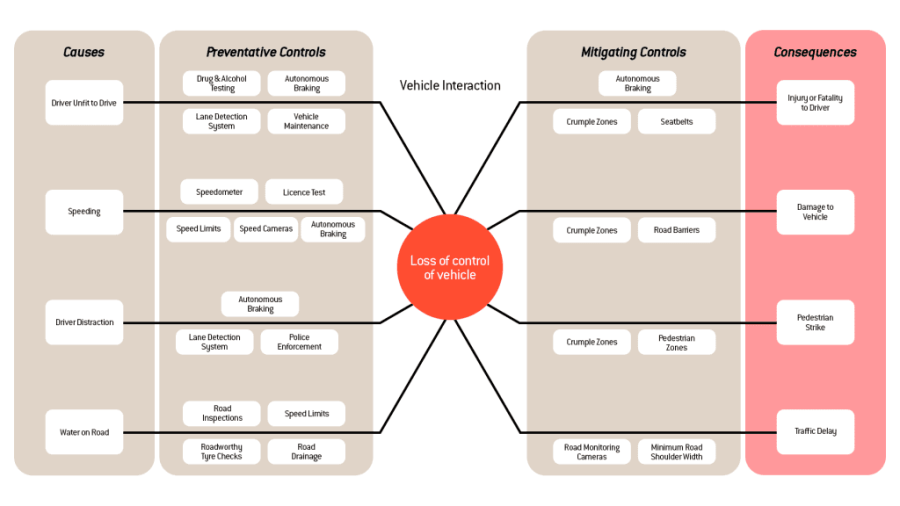
Bow tie risk assessment visualises complex risks in a single, easy-to-understand diagram shaped like a bow tie.

Today, professionals use this powerful risk analysis tool to identify and prioritise potential threats while implementing appropriate mitigation strategies.

This approach is commonly adopted in industries where safety is critical, including aviation, oil and gas, healthcare, and manufacturing.

The primary advantage of bow tie risk assessment tools is their ability to present multiple plausible risk scenarios in one comprehensive picture.

Understanding the Basics of Bow Tie Risk Assessment

Q: How does bow tie risk assessment help organisations visualise complex risks?

A bow tie analysis captures scenarios, causes, and potential impacts of risk for strategic implementation of controls.

It breaks down risk complexities into digestible components.

The methodology creates a visual representation between threats and hazards, showing how they interact to produce consequences.

Find out more about bow tie risk analysis!

Q: How does bow tie analysis address risk communication challenges?

What is bow tie risk analysis, and how does it help? The bow tie method improves risk communication among stakeholders at all levels.

It provides a common language for risk communication.

Furthermore, it helps organisations demonstrate how risks are being managed, meeting legislative requirements.

How Bow Tie Risk Assessment Works in Practice

Q: What steps are involved in conducting a bow tie risk assessment?

First, identify a significant hazard with potential for serious consequences.

Next, define the top event, which is the moment when control over the hazard is lost.

Then, brainstorm all credible threats that could trigger the top event.

For each threat, identify specific preventive barriers that act as first lines of defence.

Connect with experts for bow tie risk assessment!

Q: How are barriers evaluated in the bow tie method?

Barriers appear on both sides of the top event to interrupt unwanted scenarios.

These controls combine human behaviour and technology to prevent threats or mitigate consequences.

Effective barriers must be specific and active controls rather than vague wishes.

Conclusion

Bow tie risk assessment stands as a powerful methodology for organisations seeking to enhance their risk management processes.

This visual approach effectively transforms complex risk scenarios into clear, actionable frameworks.

Organisations across high-risk industries benefit from the structured visualisation of hazards, threats, and consequences in a single comprehensive diagram.

The methodology excels at breaking down risk complexities into manageable components that stakeholders at all levels can understand.

About Impress Solutions:

Impress Solutions specialises in implementing customised bow tie risk assessment methodologies tailored to specific organisational needs. Their risk assessment tools expertise helps companies transform abstract risk concepts into practical, actionable control strategies that protect assets, people, and operations.

To get more details, visit https://www.impresssolutions.com.au/

Original source: https://bit.ly/4av02uK

Essential Risk Management Strategies Suggested By Impress Solutions

Mining projects face severe hazards that can cause fatalities, environmental harm, or major operational disruptions. Impress Solutions provides structured methodologies to identify and manage these critical risks effectively.

TL;DR: Mining Risk Management Essentials

● Critical Risk Management focuses on risks with potential for fatality or life-changing injury.

● Each control has defined performance standards for effectiveness, maintenance, and verification.

● Strategies include Critical Control Verification, Broad-Brush Risk Assessment, and Bow Tie Risk Analysis.

● Implementation options are DIY (Do It Yourself), DWY (Do With You), and DFY (Done For You).

Risk management in mining remains a critical priority in an industry fraught with unique challenges and hazards. The mining sector continues to face significant obstacles, including worker safety concerns and a declining workforce, particularly in remote regions.

With over 100 projects completed and more than 500 clients served, Impress Solutions has delivered over 50,000 hours of expertise to clients, demonstrating its commitment to the industry-recommended 1-2-3 risk management approach.

What is Risk Management According to Impress Solutions?

According to Impress Solutions, risk management in mining is a systematic process designed to identify and manage the most severe risks with the potential to cause fatalities, environmental harm, or major disruptions.

Impress Solutions defines Critical Risk Management (CRM) as a targeted approach that prioritises risks capable of causing serious harm. This company addresses this gap by defining critical risks as those with the potential to result in fatality or life-changing injury.

How Does Impress Solutions Recommend Identifying and Managing Critical Risks?

Impress Solutions’ approach to risk management in mining begins with a structured methodology for identifying hazards that pose the highest potential for serious harm.

The Bowtie Analysis creates a visual representation of risk pathways, showing causes, consequences, and critical controls needed to mitigate risks. This methodology consists of several key steps:

1. Identifying the hazard and defining the top event (loss of control point)

2. Mapping potential causes and consequences

3. Identifying preventive controls (left side) and mitigating controls (right side)

4. Determining critical controls that are crucial for preventing or minimising consequences

For each control, Impress Solutions establishes performance standards that clearly describe what makes the control effective, who maintains it, how it should be verified, and what evidence proves it’s working.

Moreover, the company emphasises that critical risk management is not a “set and forget” process. Their safety system solutions require continuous improvement through:

● Auditing controls and verification routines

● Investigating incidents and near misses for control failures

● Using field feedback to adjust and improve

● Refreshing training as operations evolve

Additionally, independent reviews provide fresh perspectives that identify framework deficiencies and compliance issues.

What Are the Most Effective Risk Management Strategies Suggested by Impress Solutions?

Impress Solutions recommends several interconnected strategies that form a comprehensive framework:

● Critical Control Verification through routine site visits and field leadership activities that check control effectiveness in real-time

● Broad-Brush Risk Assessment (BBRA) is the foundation for identifying true critical risks and establishing clear ownership

What is Bow Tie Risk Analysis – a visual method showing potential risk pathways with hazards (centre), threats (left), consequences (right), and controls between these elements

Furthermore, this company offers flexible implementation options based on organisational needs:

● DIY (Do It Yourself): Cost-effective tools and templates

● DWY (Do With You): Partnership with expert consultants

● DFY (Done For You): Comprehensive, turnkey solutions

With the help of these strategies, your company will remain safe for a long time.

To get more details, visit https://www.impresssolutions.com.au/

Original Source: https://bit.ly/46YQnZR

Impress Solutions: Guiding You With Bow Tie Risk Assessment

Bow tie risk assessment is a powerful visual tool that helps organisations identify, map, and manage risks effectively. At Impress Solutions, the team specialises in implementing this methodology to strengthen your risk management systems.

TL;DR: Bow tie risk assessment with Impress Solutions

  • Impress Solutions implements bow tie risk assessment as a structured method that visualises hazards through a bow tie-shaped diagram.
  • The team at Impress Solutions guides clients through a structured bow tie risk assessment process.
  • Impress Solutions offers industry-leading expertise in risk assessment with years of experience.
  • Impress Solutions delivers customised risk assessment solutions, including Critical Risk Management, Safety Management Systems, and bow tie analysis for high-hazard industries.

Bow tie risk assessment is a visual tool that systematically maps risks, showing causes, events, and potential impacts. Unlike conventional risk assessment tools, this methodology provides a clear picture of both preventive and mitigating controls, allowing you to see your risk landscape at a glance. At Impress Solutions, the team knows how effective this approach can be. So, let’s discuss.

What is Bow Tie Risk Assessment and Why It Matters:

What is bow tie risk analysis? The bow tie risk assessment gets its name from the distinctive shape of its diagram – resembling a traditional necktie. This powerful analytical tool originated in the aviation and nuclear industries before expanding to sectors including oil and gas, mining, healthcare, and finance.

Primarily, a bow tie diagram centres on a “loss of control” event – the moment when control over a hazard is lost but damage hasn’t yet occurred. On the left side, you’ll find threats (potential causes), while the right side displays consequences (potential outcomes). Between these elements, critical control barriers interrupt scenarios before they escalate. Impress Solutions can guide you with this.

Step-by-Step: How to Conduct a Bow Tie Risk Assessment

  • Identify the hazard – something with potential to cause damage, such as hazardous substances or sensitive data. Next, define your “top event” – the precise moment when control over the hazard is lost.
  • Once established, map all potential threats (causes) on the left side of your diagram. Avoid generic terms like “human error” – instead, specify what actually triggers the event. On the right side, document potential consequences that could result from the top event.
  • The critical step involves identifying barriers (controls). Place preventative barriers between threats and the top event, and recovery barriers between the top event and consequences. These barriers interrupt risk scenarios before they escalate.

At Impress Solutions, the team helps organisations implement this methodology to sharpen focus on risk management, identify potential control conflicts, and prioritise actions based on objective perspectives.

Why Choose Impress Solutions

When selecting a partner for bow tie risk assessment, experience matters. As industry leaders in developing Safety and Health Management Systems, Impress Solutions brings practical knowledge from numerous completed projects.

Its commitment extends beyond implementation. It understands the pressure safety professionals face in high-hazard industries and provides ongoing support to ensure your risk assessment tools deliver tangible results.

Risk Assessment Solutions by Impress Solutions

Beyond traditional approaches, its risk assessment tools tackle your toughest safety challenges in high-hazard industries.

The exceptional approach by Impress Solutions ensures you pass audits confidently while avoiding legal risks such as industrial manslaughter charges and building a trained, engaged workforce that implements safety improvements effectively.

To get more details, visit https://www.impresssolutions.com.au/

Original Source: https://bit.ly/41Scwra